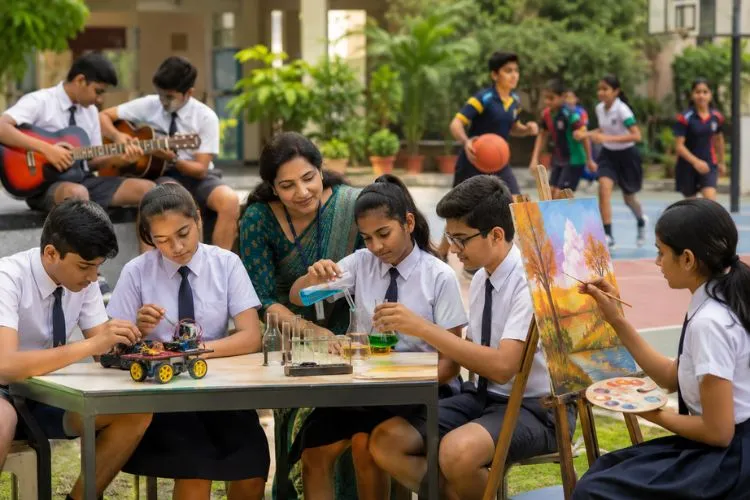

Education today is no longer limited to notebooks, exams, and classroom lectures. Children learn from experiences, interactions, challenges, and opportunities that help them understand the world around them. The most effective schools recognize this shift and create environments where learning happens everywhere. Many parents exploring CBSE Schools in South Kolkata are increasingly looking for institutions that nurture practical skills alongside academic excellence.
A modern CBSE education focuses on developing curiosity, confidence, creativity, and problem-solving abilities. While textbooks remain important, they are only one piece of the larger educational journey. Students thrive when they are encouraged to explore ideas, collaborate with peers, and connect classroom concepts with real-life situations.
Why Learning Beyond Textbooks Matters
Think about how adults learn. Most valuable lessons come from doing rather than simply reading. The same principle applies to children. When students participate in projects, experiments, discussions, and community activities, they gain a deeper understanding of concepts and retain knowledge for longer periods.
Research from the Edutopia educational platform highlights that project-based learning can improve student engagement and help learners develop critical thinking and collaboration skills. These abilities are increasingly important in a rapidly changing world.
The Role of Experiential Learning in CBSE Education
Experiential learning allows students to connect theory with practice. Instead of memorizing information for examinations, they learn how knowledge works in everyday situations.
Examples of Experiential Learning
- Science experiments that encourage observation and analysis.
- Field trips that connect classroom lessons with real-world environments.
- Art and cultural programs that build creativity and self-expression.
- Community service projects that develop empathy and social responsibility.
For instance, a lesson on environmental conservation becomes more meaningful when students participate in tree-planting initiatives or recycling campaigns. Such experiences create lasting impressions and inspire responsible behavior.
Building Future-Ready Skills
Academic scores remain important, but employers and universities increasingly value skills that go beyond traditional learning. Communication, teamwork, leadership, adaptability, and innovation are now essential qualities for future success.
According to the World Economic Forum, analytical thinking, creativity, and resilience are among the most sought-after skills in the evolving job market. Schools that encourage active participation and hands-on learning help students develop these competencies early.
Skills Developed Beyond the Classroom
- Public speaking and presentation abilities.
- Leadership through student councils and clubs.
- Time management through project-based assignments.
- Critical thinking through debates and discussions.
- Digital literacy through technology-integrated learning.
These experiences help students become independent learners who are better prepared to face future academic and professional challenges.
The Importance of Co-Curricular Activities
A well-rounded education recognizes that every child has unique strengths. Some excel in academics, while others discover their talents through sports, music, dance, theatre, or creative arts. Co-curricular activities provide valuable opportunities for students to build confidence and explore their interests.
Many leading schools encourage participation in inter-school competitions, cultural festivals, sports tournaments, and innovation challenges. Such activities teach perseverance, teamwork, and discipline while creating memorable learning experiences.
Creating Strong Foundations from the Beginning
The journey toward holistic learning starts early. Parents evaluating the Admission Criteria for Nursery often seek schools that prioritize both academic readiness and emotional development. Early childhood education plays a crucial role in shaping communication skills, social awareness, and confidence.
Young learners benefit greatly from activity-based learning methods, storytelling sessions, interactive play, and collaborative projects. These experiences make learning enjoyable while strengthening foundational skills.
How Technology Expands Learning Opportunities
Technology has transformed education in remarkable ways. Digital tools, virtual simulations, educational applications, and interactive platforms provide students with access to information and learning experiences that extend beyond traditional classroom settings.
- Virtual field trips help students explore global destinations.
- Educational videos simplify complex concepts.
- Collaborative online projects encourage teamwork.
- Interactive learning platforms support personalized education.
When used thoughtfully, technology complements traditional teaching methods and encourages independent exploration.
Frequently Asked Questions
1. Why is learning beyond textbooks important for students?
Learning beyond textbooks helps students develop practical skills, critical thinking abilities, creativity, and confidence. It prepares them to apply knowledge in real-world situations.
2. How do CBSE schools encourage experiential learning?
CBSE schools often use project-based learning, science experiments, field visits, group activities, and community engagement programs to make learning more interactive and meaningful.
3. What role do co-curricular activities play in student development?
Co-curricular activities help students build leadership, teamwork, communication skills, discipline, and self-confidence while exploring their personal interests and talents.
4. Can technology improve classroom learning?
Yes. Technology provides access to interactive resources, virtual experiences, personalized learning opportunities, and collaborative projects that enhance student engagement.
Final Thoughts
Education is at its best when it inspires students to think, explore, question, and create. While textbooks provide essential knowledge, meaningful learning often happens through experiences, collaboration, and discovery. Schools that embrace holistic education help students develop not only academic excellence but also the life skills needed to thrive in an ever-changing world.