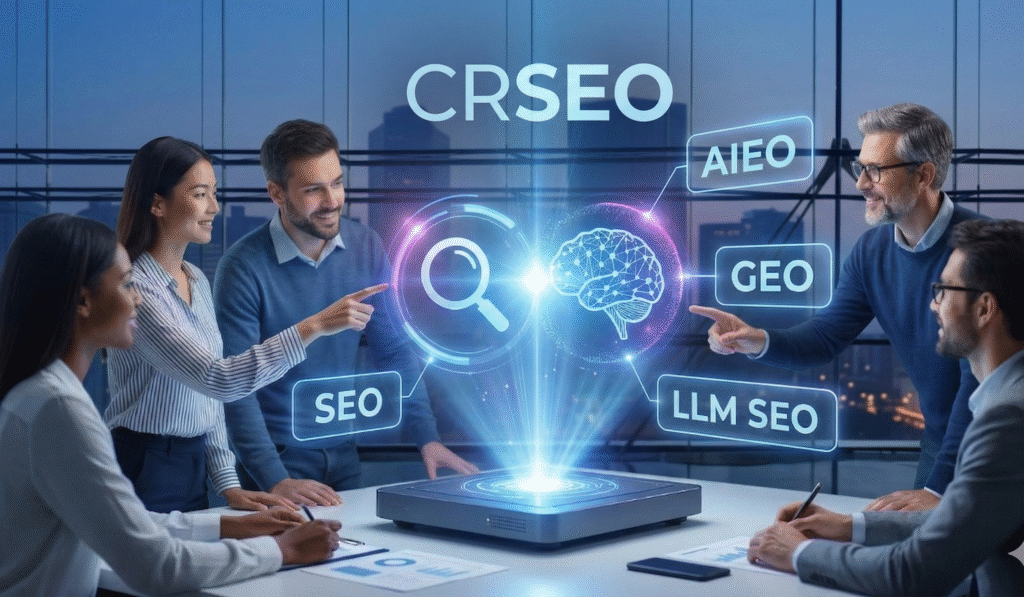

Search engines are changing—quietly, but dramatically. We’re moving from keyword-based indexing to AI-driven understanding. That means your website isn’t just being crawled anymore; it’s being interpreted. So, here’s the real challenge: is your site structured in a way that machines can truly understand, not just scan?
Forward-thinking brands, often guided by an experienced SEO Consultant in Mumbai, are already redesigning their website architecture for AI-first search. It’s no longer about ranking pages—it’s about building systems that communicate clearly with large language models (LLMs).
What is AI-Ready Website Architecture?
In simple terms, AI-ready architecture means structuring your website so that both humans and machines can easily interpret it. LLM SEO focuses on clarity, context, and relationships between content—not just keywords.
- Semantic Structure: Clear hierarchy of topics and subtopics
- Contextual Linking: Meaningful connections between pages
- Structured Data: Machine-readable information layers
According to Google Search Central, content that demonstrates clear expertise and structure is more likely to perform well in AI-driven search systems. In other words, clarity is becoming the new ranking factor.
Why Traditional SEO Architecture Falls Short
Traditional SEO focused heavily on keywords, backlinks, and technical tweaks. While those still matter, they’re no longer enough in isolation.
The Limitations of Old-School SEO
- Keyword Overload: Content optimized for bots, not understanding
- Shallow Linking: Pages connected without meaningful context
- Fragmented Content: Lack of topic depth and authority
A report from McKinsey & Company suggests that AI adoption is accelerating across industries, including search and content discovery. Websites that fail to evolve risk becoming invisible in this new ecosystem.
Core Principles of LLM SEO Architecture
Building an AI-ready website isn’t about adding more—it’s about structuring better. Think of it like organizing a library: the easier it is to navigate, the more valuable it becomes.
- Topic Clusters: Group related content under clear themes
- Entity-Based SEO: Focus on concepts, not just keywords
- Internal Linking Depth: Create logical pathways between pages
This is where collaboration with an India SEO Company can make a difference. Building scalable, AI-friendly architecture requires both technical precision and strategic planning.
Technical Elements That Matter Most
Beyond content, the technical foundation of your website plays a crucial role in LLM SEO.
- Schema Markup: Helps AI understand content context
- Clean URL Structures: Improves readability for both users and bots
- Fast Load Times: Enhances user experience and crawl efficiency
Interestingly, data from web.dev shows that faster websites not only improve user experience but also contribute to better search performance. Speed, structure, and semantics now work together.
Content Strategy for AI Understanding
Here’s where things get a bit nuanced. Writing for LLM SEO isn’t about stuffing keywords—it’s about building meaning.
- Create comprehensive, in-depth content around topics
- Use natural language and conversational phrasing
- Answer related questions within the same content ecosystem
This approach aligns with emerging trends like AI search optimization and semantic SEO, where context matters more than repetition.
Common Mistakes to Avoid
Even well-designed websites can struggle if certain pitfalls aren’t addressed.
- Over-Optimization: Writing for algorithms instead of users
- Poor Content Structure: Lack of headings and logical flow
- Ignoring Internal Links: Missing opportunities to build context
Think of your website as a conversation with AI systems. If the message is unclear, it simply won’t be understood.
FAQs
What is LLM SEO?
LLM SEO focuses on optimizing websites for AI-driven search engines by improving content structure, context, and semantic relevance.
How is AI-ready architecture different from traditional SEO?
AI-ready architecture emphasizes semantic structure, contextual linking, and user intent, rather than just keywords and backlinks.
Why is structured data important for AI SEO?
Structured data helps AI systems understand the meaning and relationships of content, improving visibility in search results.
Can small websites adopt LLM SEO strategies?
Yes, even small websites can implement structured content, internal linking, and semantic SEO to improve AI search performance.
Final Thoughts
The future of SEO isn’t about chasing algorithms—it’s about aligning with how machines understand information. Build your website like a well-structured knowledge system, and you won’t just rank—you’ll remain relevant in an AI-first world.
Blog Development Credits:
This blog was thoughtfully conceptualized by Amlan Maiti, developed with the help of advanced AI tools like ChatGPT, Gemini, and Copilot, and refined with expert SEO insights from Digital Piloto.