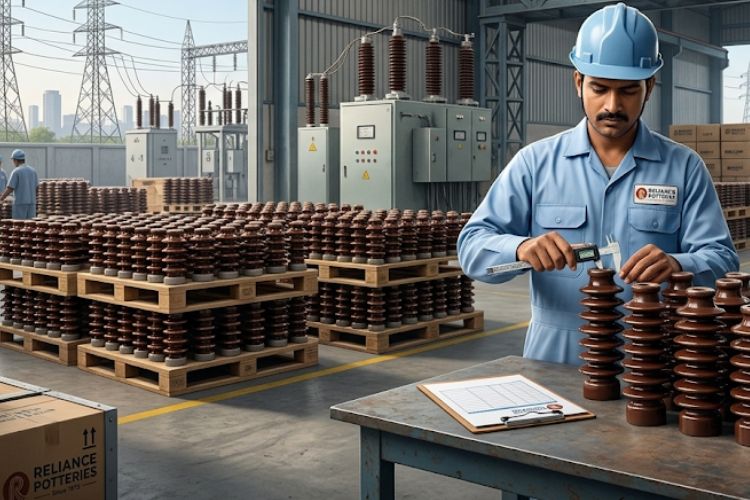

Every time electricity travels across transmission lines, substations, and industrial facilities, one unsung component works quietly behind the scenes—electrical insulators. Without them, power systems would struggle to operate safely and efficiently. As India continues expanding its energy infrastructure, the demand for durable, high-performance insulators has never been greater. So, what separates the leading manufacturers from the rest?
The answer lies in engineering expertise, material quality, and long-term reliability. Today, many industries and utility providers rely on trusted Electrical Insulator Manufacturers in India to deliver products capable of withstanding demanding environmental and operational conditions. From transmission networks to heavy industries, these manufacturers play a crucial role in keeping power flowing safely.
Also Read: The Importance of Thermal Resistance in Industrial Insulation Components
Why Electrical Insulators Matter More Than Ever
As India’s energy demand continues to grow, power infrastructure is becoming increasingly sophisticated. Insulators serve a simple yet critical function: they prevent unwanted electrical flow while supporting conductors mechanically. It sounds straightforward, but in real-world conditions involving rain, pollution, heat, and voltage fluctuations, performance becomes much more complex.
According to the Ministry of Power, Government of India, the country continues investing heavily in transmission and distribution infrastructure to support economic growth and renewable energy integration. This expansion naturally increases the demand for high-quality power transmission insulators and industrial insulation solutions.
Characteristics of Leading Insulator Manufacturers
The best manufacturers don’t simply produce insulators—they engineer products designed for reliability over decades. Experienced utility companies often evaluate suppliers based on several important factors.
- Strict quality control processes.
- Compliance with international testing standards.
- Advanced ceramic and composite material technologies.
- Strong research and development capabilities.
- Consistent supply and after-sales support.
These qualities help ensure that insulators perform reliably under challenging environmental conditions, including coastal humidity, industrial pollution, and extreme temperatures.
Types of Insulators Driving Industry Demand
Porcelain Insulators
Porcelain remains one of the most trusted insulating materials due to its mechanical strength and long service life. It continues to be widely used in transmission and distribution applications across India.
Composite Insulators
Modern composite insulators offer lightweight construction and excellent contamination resistance. Their growing popularity reflects the industry’s focus on efficiency and ease of installation.
Specialized Industrial Insulators
Industrial facilities often require custom-designed solutions for electrostatic precipitators, transformers, and heavy electrical equipment. These applications demand precision manufacturing and superior material performance.
The Growing Role of Advanced Manufacturing
The electrical industry is evolving rapidly, and insulator production is evolving alongside it. Modern manufacturing facilities use sophisticated testing equipment to evaluate mechanical strength, dielectric performance, and resistance to environmental stress.
Many leading companies are investing in automation and advanced material science to improve product consistency. This is especially important for sectors such as renewable energy, where system reliability directly impacts power generation efficiency.
In the middle of these innovations, a reputable FRP Shaft Insulators Manufacturer contributes significantly to industrial applications that require high-strength insulation combined with excellent mechanical durability.
How Buyers Choose the Right Manufacturer
Selecting an insulator supplier involves more than comparing product catalogs. Experienced procurement teams often assess a manufacturer’s long-term capabilities.
- Evaluate product certifications and testing reports.
- Review industry experience and project history.
- Assess manufacturing capacity and scalability.
- Examine material quality and innovation efforts.
- Consider technical support and delivery reliability.
Interestingly, many utility operators prioritize reliability over short-term cost savings. A slightly higher-quality insulator can help prevent expensive outages and maintenance challenges later.
Industry Trends Shaping the Future
Several emerging trends are influencing India’s insulator manufacturing landscape:
- Increasing demand from renewable energy projects.
- Greater adoption of composite insulation technology.
- Expansion of high-voltage transmission networks.
- Focus on sustainability and efficient manufacturing processes.
As solar and wind installations continue expanding, manufacturers capable of delivering dependable electrical insulation products are expected to remain at the forefront of industry growth.
Frequently Asked Questions
What are electrical insulators used for?
Electrical insulators prevent unintended current flow while supporting conductors and electrical equipment safely within power systems.
Why are porcelain insulators still widely used?
Porcelain offers excellent durability, mechanical strength, and long-term performance in a wide range of environmental conditions.
What industries commonly use industrial insulators?
Power generation, transmission, distribution, manufacturing, steel plants, cement facilities, and renewable energy projects all depend on industrial insulators.
How do I choose a reliable insulator manufacturer?
Look for proven industry experience, quality certifications, advanced manufacturing capabilities, testing standards, and strong customer support.
Also Read: Top Insulators Manufacturers in India 2026
Final Thoughts
India’s expanding energy infrastructure relies heavily on dependable insulation technology. Manufacturers that prioritize quality, innovation, and engineering excellence are helping power the country’s future. Choosing the right supplier is not merely a procurement decision—it’s an investment in safety, efficiency, and long-term operational reliability.
Blog Development Credits
This article was developed through detailed industry research and advanced AI-assisted content creation tools. Final editorial refinement, SEO improvements, and content optimization were completed by Reliance Potteries to enhance accuracy, readability, and value for industry professionals.