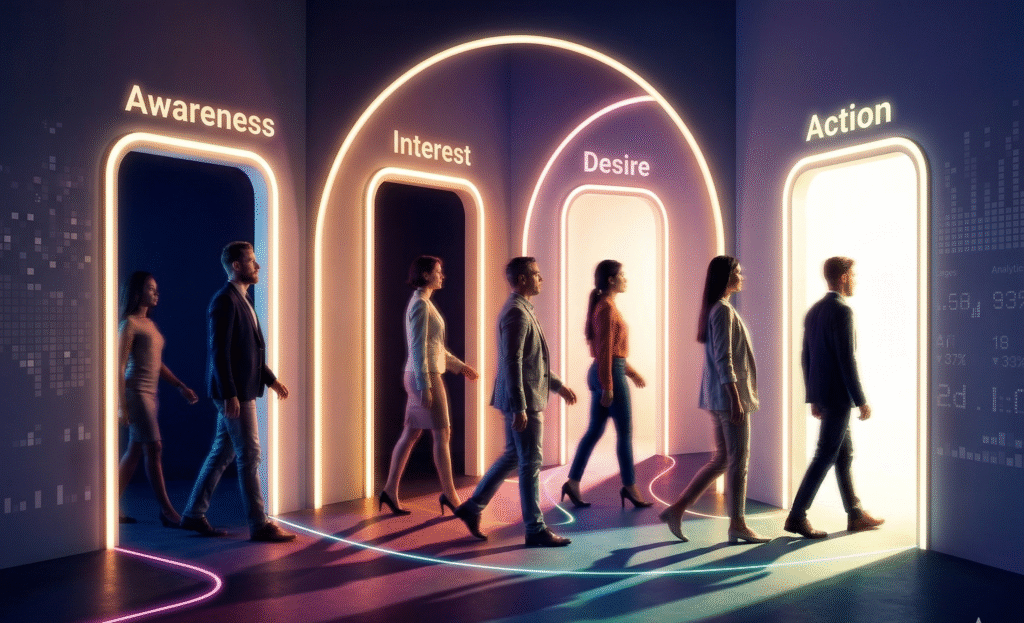

Have you ever clicked on something online and later wondered—“Why did that grab me?” That tiny moment of curiosity, impulse, or emotion is exactly where neuro-marketing operates. Now, blend that with AI, and suddenly marketing isn’t just guessing behavior—it’s decoding it. Welcome to a world where technology meets the human mind in surprisingly powerful ways.
Businesses collaborating with a Digital Marketing Consultant in Bhubaneswar are increasingly exploring this intersection. Because understanding not just what users do—but why they do it—can unlock a completely new level of engagement.
What Is Neuro-Marketing in the Digital Age?
Neuro-marketing focuses on how the brain responds to marketing stimuli—colors, words, layouts, even micro-interactions. It draws from psychology, neuroscience, and behavioral economics to understand decision-making patterns.
According to research highlighted by Harvard Business Review, emotional connection often drives customer loyalty more than rational factors. That insight alone has reshaped how brands approach messaging.
Key Triggers in Neuro-Marketing
- Emotional cues: Content that evokes feelings like trust or excitement
- Cognitive ease: Simplicity that reduces mental effort
- Visual hierarchy: Guiding attention through design
In essence, neuro-marketing is about aligning your message with how the brain naturally processes information.
Where AI Changes the Game
Traditionally, understanding human behavior required surveys, focus groups, and a fair bit of guesswork. AI changes that equation entirely. It analyzes real-time data—clicks, scrolls, pauses—and identifies patterns at scale.
A report from IBM suggests that businesses using AI-driven insights often make faster and more accurate decisions. And when those insights are applied to neuro-marketing principles, the results can feel almost intuitive.
How AI Enhances Behavioral Insights
- Pattern recognition: Detecting subtle user behaviors across platforms
- Predictive modeling: Anticipating user intent before actions occur
- Adaptive content delivery: Adjusting messaging in real time
This is where behavioral targeting and AI-powered marketing converge—turning raw data into meaningful action.
The Science of Digital Behavior
Digital behavior isn’t random. It’s influenced by subconscious triggers, past experiences, and even environmental context. AI helps uncover these patterns, while neuro-marketing explains them.
Common Behavioral Patterns Online
- Scanning over reading: Users skim content rather than reading deeply
- Choice overload: Too many options can reduce decision-making
- Social proof reliance: Reviews and testimonials heavily influence trust
Understanding these tendencies allows brands to design experiences that feel natural—almost effortless—for users.
Strategy Still Matters
Even with advanced tools, strategy remains the backbone of effective marketing. Many organizations partner with an experienced India Digital Marketing Company to bridge the gap between data and creativity.
Because knowing what users think is one thing—turning that insight into meaningful engagement is another.
Building a Neuro-AI Strategy
- Audience mapping: Identifying emotional and behavioral triggers
- Content personalization: Aligning messages with user intent
- Continuous testing: Refining strategies based on performance data
It’s a blend of science and storytelling—and that balance is what makes it effective.
Real-World Applications
You’ve probably experienced neuro-marketing and AI in action without even realizing it:
- E-commerce: Urgency cues like “Only 2 left” trigger faster decisions
- Streaming platforms: Personalized thumbnails based on viewing habits
- Landing pages: Strategic color choices guiding user attention
These subtle techniques shape digital experiences in ways that feel seamless rather than forced.
Challenges to Consider
Of course, with great power comes responsibility. Combining neuroscience and AI raises important questions.
- Ethical concerns: Avoiding manipulation of user emotions
- Data privacy: Ensuring responsible data usage
- Over-automation: Maintaining a human touch in communication
The goal should always be to enhance user experience—not exploit it.
FAQs
1. What is neuro-marketing?
Neuro-marketing studies how the brain responds to marketing stimuli to understand consumer behavior.
2. How does AI improve neuro-marketing?
AI analyzes large datasets to identify behavioral patterns and predict user actions in real time.
3. Is neuro-marketing ethical?
When used responsibly, it enhances user experience. Ethical concerns arise only when it manipulates users unfairly.
4. Can small businesses use neuro-marketing with AI?
Yes, many affordable tools make it accessible for businesses of all sizes.
Final Thoughts
At its core, marketing has always been about understanding people. Neuro-marketing and AI simply take that understanding deeper—into the subtle, often invisible layers of human behavior. When used thoughtfully, this combination doesn’t just improve campaigns; it creates experiences that feel genuinely meaningful. And in today’s digital world, that’s what truly resonates.
This article was thoughtfully initiated by Amlan Maiti, developed using advanced AI platforms, and fine-tuned with expert insights from Digital Piloto.