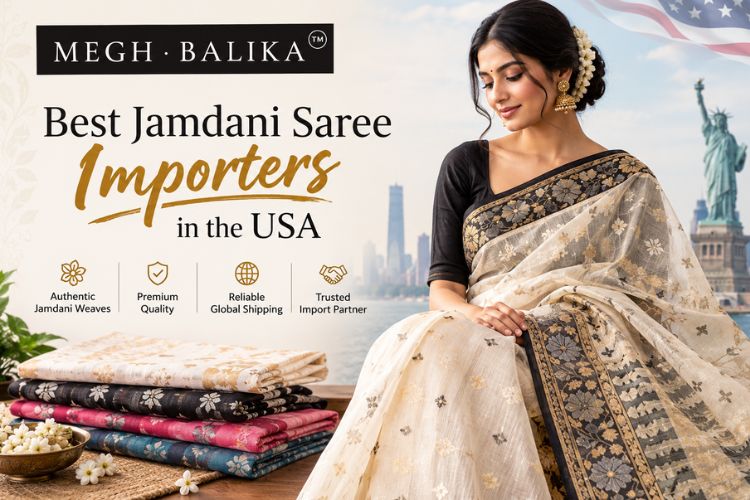

Jamdani sarees have a special way of catching the eye. Their delicate motifs, airy fabrics, and intricate craftsmanship make them appealing to boutique owners, ethnic fashion retailers, and collectors alike. For US buyers, however, finding the right supplier involves more than choosing beautiful designs. Authenticity, consistent quality, reliable sourcing, and clear communication matter just as much.
Whether you’re building a South Asian fashion collection or expanding a textile business, working with the right supplier makes a difference. Businesses exploring handcrafted Indian textiles may also consider a Kantha Stitched Apparel Supplier to complement their Jamdani range with another distinctive traditional craft.
Also Read: How to Identify Trending Saree Styles That Sell in Boutique Stores
Why Authentic Jamdani Sarees Stand Out
Jamdani is celebrated for its detailed motifs, often woven into lightweight fabric through a painstaking supplementary-weft technique. Traditionally associated with Bengal, particularly the Dhaka weaving tradition, this textile art requires considerable skill and patience. Floral patterns, geometric shapes, and delicate decorative elements can give each saree its own character.
For retailers, that craftsmanship offers something beyond an ordinary fashion product. A well-selected Jamdani collection can appeal to customers seeking heritage clothing, distinctive occasion wear, or garments that connect traditional artistry with contemporary styling.
Authenticity is important, though. Not every saree marketed as Jamdani has been produced using the same weaving methods or materials. Buyers should ask suppliers for clear product descriptions, fabric details, origin information, and photographs that accurately represent the merchandise.
What to Look for in a Jamdani Saree Importer
The best supplier for your business is not necessarily the one with the largest catalogue. It is the one whose products, service, and ordering process fit your needs. Before placing a wholesale order, evaluate the following factors.
- Craftsmanship and product transparency: Look for detailed information about weaving techniques, fabric composition, motifs, and finishing.
- Consistent quality: Ask about inspection procedures, colour consistency, stitching or finishing standards, and how damaged products are handled.
- Wholesale flexibility: Check minimum order quantities, available designs, repeat-order options, and whether sample purchases are possible.
- Clear commercial terms: Confirm prices, payment arrangements, shipping charges, customs responsibilities, and return policies before ordering.
- Responsive communication: A supplier who answers questions clearly can help reduce misunderstandings when sourcing across countries.
These details are especially important for boutiques that need a recognisable style while managing stock levels and customer expectations.
Why US Boutiques Need a Reliable Sourcing Partner
American customers have varied preferences. Some look for traditional Jamdani sarees for weddings and cultural celebrations, while others prefer understated designs that can be styled for smaller gatherings. Retailers may therefore benefit from a collection that balances classic motifs with contemporary colour combinations.
A dependable sourcing partner can help buyers understand the available range, identify suitable designs, and plan purchases around seasonal demand. However, businesses should not assume every supplier offers customisation, exclusive designs, or large-volume availability. These services should be confirmed directly before making commercial commitments.
Retailers searching for a jamdani importer USA should also consider whether sourcing directly from an Indian textile business suits their budget and operating model. A supplier such as Megh Balika, which presents a range of traditional Indian sarees, is one option to explore when researching Jamdani products for a boutique or wholesale collection. Buyers should verify current availability, wholesale terms, and international shipping arrangements before ordering.
How to Evaluate Suppliers Before Ordering
Beautiful product photography can attract attention, but a structured evaluation helps protect your investment. Start with a small, manageable order whenever possible, especially if you have not purchased from the supplier before.
- Request product samples or detailed photographs. Check the fabric, motif definition, colour, finishing, and overall presentation.
- Compare the complete landed cost. Include the product price, international freight, applicable duties, taxes, and other import-related charges.
- Review delivery and quality policies. Understand dispatch estimates, tracking arrangements, damage reporting, and remedies for incorrect orders.
- Test customer demand. Start with a balanced selection of designs before committing to a large inventory.
For US importers, the US Customs and Border Protection import-export guidance provides a useful starting point for understanding import procedures. Textile classification, duties, and documentation requirements can vary, so verify the rules applicable to your specific shipment.
Building a Distinctive Wholesale Saree Collection
Successful sourcing is about more than finding a low purchase price. A thoughtful assortment can make your boutique easier to distinguish from competitors. Consider combining traditional Jamdani patterns with varied colour palettes, lighter everyday options, and statement pieces for special occasions.
It may also be worthwhile to explore complementary crafts such as Kantha embroidery, Banarasi textiles, or Tussar silk. These additions can broaden your selection while giving customers more ways to discover Indian textile traditions.
Keep product descriptions accurate and explain the craftsmanship without making unsupported claims about handmade production, fabric purity, or geographical origin. Honest storytelling helps customers appreciate the product and supports long-term trust.
Frequently Asked Questions
1. How can I identify an authentic Jamdani saree?
Ask about the weaving technique, fabric composition, place of production, and maker or supplier documentation. Detailed photographs and, where possible, a physical sample can help you assess craftsmanship.
2. Can US boutiques purchase Jamdani sarees wholesale from India?
Yes, international sourcing may be possible through suppliers that support wholesale or export orders. Confirm minimum quantities, payment terms, shipping arrangements, and applicable import requirements before purchasing.
3. What should I check before placing a bulk order?
Review product quality, colour consistency, pricing, lead times, shipping costs, return policies, and the supplier’s approach to damaged or incorrect items. Begin with samples or a smaller order when practical.
4. Are Jamdani sarees suitable for contemporary fashion boutiques?
Yes. Their distinctive motifs and lightweight appearance can appeal to customers seeking traditional occasion wear or heritage-inspired fashion. A balanced selection of colours and designs can help serve different preferences.
Final Thoughts
Finding the right Jamdani saree importer in the USA begins with understanding your customers and choosing a sourcing partner that values quality, transparency, and reliable service. Take time to verify product details, compare the full cost of importing, and assess samples before placing larger orders. When craftsmanship and sound business practices come together, a Jamdani collection can offer lasting appeal in a competitive fashion market.
Also Read: Wholesale Buying Guide for Jamdani Textile Suppliers
Blog Development Credits
Megh Balika developed the concept, used AI-assisted research and writing tools including ChatGPT, Google Gemini, and Copilot, and refined the article for clarity, search relevance, and SEO.