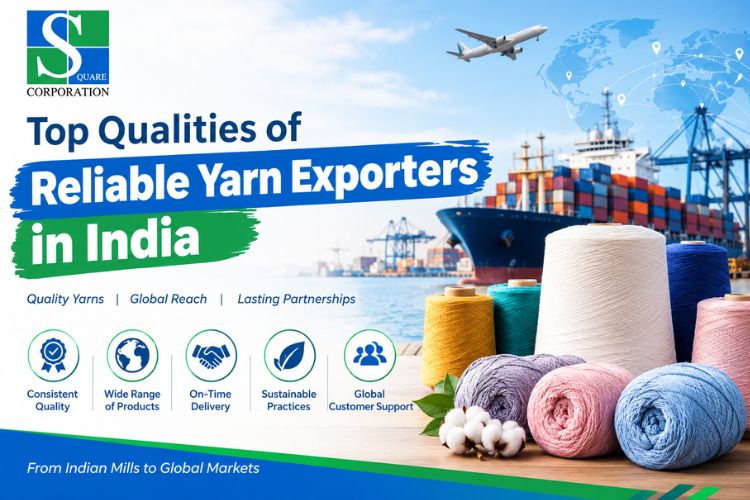

Finding a dependable yarn supplier can make or break a textile business. Consistent quality keeps production running smoothly, while delayed shipments or uneven specifications can disrupt an entire order. For international buyers sourcing from India, choosing the right exporter means looking beyond attractive prices to evaluate product expertise, communication, quality control, and long-term reliability.
India’s textile industry offers a wide range of yarn options for manufacturers, wholesalers, and fabric producers. Experienced Indian Textile Exporters can help international buyers navigate product specifications, sourcing requirements, and export arrangements while building a supply relationship that supports consistent business growth.
Also Read: Breathable Fabrics Explained: Why Natural Fibers Are in Demand
1. Consistent Yarn Quality and Specifications
Reliable yarn exporters understand that consistency matters just as much as the initial sample. A yarn may look suitable during evaluation, but differences in strength, thickness, colour, or uniformity can affect weaving, knitting, dyeing, and the finished fabric.
Professional suppliers pay attention to product specifications and quality checks throughout the sourcing process. Buyers should ask about yarn count, fibre composition, tensile strength, twist, and other characteristics relevant to their intended application.
Before confirming a purchase, look for these quality indicators:
- Specification accuracy: Product descriptions and technical documents should match the agreed requirements.
- Batch consistency: Quality should remain reasonably consistent across repeat orders and production lots.
- Testing procedures: Ask what checks are performed and whether relevant test reports are available.
These details are particularly important for textile manufacturers working to tight production tolerances. A dependable exporter recognises that a small variation in raw material can create much larger problems further down the production line.
2. A Broad and Relevant Product Range
Different textile applications require different yarn characteristics. Apparel manufacturers may prioritise softness, colour performance, and comfort, while industrial or home-textile producers may focus more heavily on strength, durability, and processing suitability.
A capable exporter should understand the differences between available products and explain which specifications may suit a buyer’s needs. Depending on the supplier’s portfolio, options may include cotton yarn, recycled yarn, blended yarn, and other specialised textile materials.
However, a large catalogue is not automatically a sign of superior service. Buyers should establish whether the exporter can supply the required grade, quantity, and delivery schedule rather than assuming every listed product is available for immediate dispatch.
3. Transparent Pricing and Commercial Terms
Competitive pricing is important, but the lowest quotation does not always represent the best value. Differences in fibre quality, packaging, shipment arrangements, payment terms, and delivery responsibilities can change the overall cost of a transaction.
Trustworthy yarn suppliers in India explain their quotations clearly. They help buyers understand the agreed specifications, order quantities, applicable charges, payment schedule, and shipping conditions before an order is confirmed.
When comparing quotations, evaluate:
- The yarn specification and quality level included in the quoted price.
- Minimum order quantities and provisions for repeat purchases.
- Packaging, freight, insurance, and other applicable charges.
- Payment conditions, dispatch estimates, and responsibilities for customs clearance.
For international orders, buyers should also clarify the agreed Incoterms, which define important responsibilities between sellers and buyers in a trade transaction.
4. Export Experience and Reliable Logistics
Exporting yarn involves more than preparing goods for dispatch. Documentation, packaging, shipment coordination, and communication with logistics partners all contribute to a smooth transaction. An avoidable paperwork error can delay a shipment even when the products themselves are ready.
Experienced exporters understand the importance of accurate commercial invoices, packing lists, product descriptions, and other documents required for the particular shipment. They should also provide realistic dispatch estimates and timely updates when circumstances change.
Businesses evaluating Yarn Exporters in India should ask about previous export markets, shipment coordination, and their process for managing delays or discrepancies. The Directorate General of Foreign Trade (DGFT) provides official information on India’s foreign trade policies and export-related requirements.
5. Clear Communication and Customer Support
International sourcing often involves different time zones, production schedules, and business expectations. Clear communication helps prevent misunderstandings before they turn into costly problems.
A reliable exporter responds to technical questions, confirms specifications in writing, and keeps buyers informed about order progress. If a particular yarn grade becomes unavailable, a professional supplier should explain the situation rather than quietly substituting a different product.
Before placing a substantial order, consider starting with a sample or smaller purchase where practical. This provides an opportunity to assess product quality, responsiveness, packaging, and the supplier’s ability to meet agreed commitments.
6. Ethical Sourcing and Long-Term Partnership
Modern textile buyers increasingly consider where materials come from and how supply chains are managed. Depending on the market and customer requirements, they may request information about fibre origins, recycled content, relevant certifications, or environmental management practices.
Responsible exporters should communicate accurately about any sustainability claims and provide supporting documentation when available. Certifications should be checked for their scope, validity, and relevance to the specific product or transaction.
Ultimately, a strong exporter relationship develops through consistent performance. Reliable communication, fair commercial practices, and a willingness to resolve issues can make repeat orders easier to manage and help both businesses plan ahead.
Frequently Asked Questions
1. How do I choose a reliable yarn exporter in India?
Compare product quality, technical specifications, export experience, pricing transparency, documentation, and customer communication. Request samples and verify that the supplier can meet your required quantities and delivery schedule.
2. Which types of yarn can Indian exporters supply?
Depending on their product range, exporters may supply cotton, recycled, blended, and other specialised yarns. Confirm fibre composition, yarn count, availability, and suitability for your intended application.
3. What documents should I request from a yarn exporter?
Depending on the transaction, relevant documents may include technical datasheets, test reports, commercial invoices, packing lists, certificates of origin, and applicable certification records. Requirements vary by product and destination.
4. Why is yarn quality consistency important?
Consistent yarn helps manufacturers maintain predictable processing performance, fabric appearance, and production efficiency. Variations between batches can cause defects, rework, and avoidable production costs.
Final Thoughts
The best yarn exporters in India combine dependable product quality with transparent pricing, export knowledge, and responsive service. By checking specifications, evaluating samples, reviewing documentation, and clarifying commercial terms, buyers can make better sourcing decisions. The goal is not simply to find a supplier for today’s order, but to build a partnership that supports reliable textile production over time.
Also Read: Sustainable Fabric Supplier Guide for Indian Brands
Blog Development Credits
This article was developed by Square Corporation, researched and drafted with AI-assisted tools such as ChatGPT, Google Gemini, and Copilot, then refined by Square Corporation for search relevance and readability.