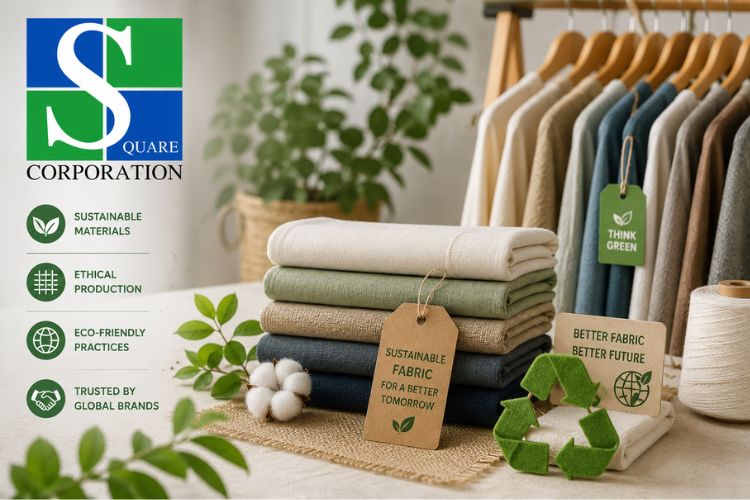

For Indian fashion and textile brands, sustainability is no longer just a label on a product page. Customers increasingly want to know where fabrics come from, how they are made, and whether claims can be trusted. So, how do you choose a supplier that balances quality, cost, consistency, and responsible production without making sourcing unnecessarily complicated?
Working with reliable Sustainable Fabric Suppliers India can make that decision much easier. The right supplier should offer more than attractive fabric samples; they should provide useful information about fibre composition, certifications, production processes, and supply-chain practices.
Also Read: Why Extra-Long Staple Cotton is Ideal for High-Quality Fabrics
Why Sustainable Fabric Sourcing Matters
The scale of the textile industry makes responsible sourcing particularly important. Textile Exchange reports that global fibre production reached approximately 132 million tonnes in 2024, with polyester accounting for about 59% of total fibre output. The organisation also notes that less than 1% of the global fibre market came from recycled pre- and post-consumer textiles.
That gap tells an interesting story. Sustainable sourcing is moving forward, but there is still plenty of room for brands to make better choices. For an Indian apparel company, even a gradual shift toward eco-friendly textile materials, recycled fibres, or responsibly sourced natural fabrics can strengthen its long-term sourcing strategy.
What Should You Look for in a Sustainable Fabric Supplier?
Not every fabric described as “green” has the same environmental credentials. A careful buyer should look beyond marketing language and ask practical questions before placing a bulk order.
- Fibre composition: Check exactly what the fabric contains and whether recycled or organic inputs are genuinely used.
- Certification: Ask for relevant documentation where applicable, rather than relying solely on sustainability claims.
- Traceability: Find out whether the supplier can explain the fabric’s origin and major stages of production.
- Quality consistency: Sustainable fabric still needs dependable colour, weight, construction, shrinkage and performance.
- Production capacity: A supplier should be capable of supporting your expected order volumes without compromising specifications.
Certifications Can Add Confidence
Depending on the material and product, buyers may consider standards such as GOTS for organic textiles, GRS for recycled materials, or other recognised schemes relevant to the fibre and supply chain. The important point is not to collect certificates simply for a website badge. Instead, choose certifications that actually support the sustainability claim you intend to make.
Choose Materials According to the Product
A common sourcing mistake is selecting a fabric because it sounds sustainable and only later discovering that it does not suit the finished product. A lightweight summer shirt, children’s garment, workwear collection and upholstery product can have completely different fabric requirements.
Consider factors such as:
- Expected garment lifespan and washing conditions
- Breathability, softness and moisture management
- Colourfastness and dimensional stability
- Required GSM, weave or knit construction
- End-of-life or recycling considerations
For example, recycled polyester can be useful where durability and performance are important, while organic or responsibly produced cotton may suit brands looking for a natural-fibre story. Textile Exchange’s latest market data shows that recycled polyester production increased in 2024, although its share of total polyester production fell slightly because virgin polyester production grew faster.
Why Supplier Transparency Should Matter to Indian Brands
Price is obviously important, especially for growing brands. But the cheapest quotation is not always the cheapest option after colour variation, rejected batches, delayed deliveries and inconsistent quality are factored in.
This is where an experienced Textile Exporter Ludhiana or established fabric sourcing partner can add practical value. A supplier familiar with export requirements and bulk production can help brands understand specifications, documentation, lead times and quality expectations before production begins.
Transparency also deserves attention. Textile Exchange’s 2024 Materials Benchmark found that reporting brands still had difficulty identifying the country of origin of their raw materials, with 80% of cotton and 75% of polyester reported as having an unknown country of origin.
Build a Better Supplier Evaluation Process
Instead of choosing a supplier after one attractive sample, create a simple evaluation process. Request samples, compare technical specifications, verify documentation and discuss production capacity. If possible, begin with a smaller order before committing to a large seasonal programme.
- Define your fabric specification before approaching suppliers.
- Shortlist suppliers based on material expertise and production capability.
- Request samples and documents for quality and sustainability verification.
- Test the fabric for performance relevant to your finished product.
- Review pricing and lead times alongside quality rather than separately.
- Maintain supplier records so sustainability claims remain traceable.
Frequently Asked Questions
What makes a fabric supplier sustainable?
A sustainable supplier should be able to demonstrate responsible material sourcing, transparent production information, appropriate certifications, consistent quality and efforts to reduce environmental impacts.
Is recycled polyester always the most sustainable fabric choice?
Not necessarily. The right material depends on the product, durability requirements, fibre source, manufacturing process and end-of-life considerations. Sustainability should be assessed across the specific application.
Which certifications should Indian brands look for?
The appropriate certification depends on the material and claim. GOTS may be relevant for organic textiles, while GRS is commonly associated with recycled materials. Brands should verify the certification’s scope and applicability.
How can a small brand start sustainable fabric sourcing?
Start with clear fabric specifications, order samples, ask suppliers for supporting documentation, compare several suppliers and test smaller quantities before scaling up. This reduces both financial and sourcing risks.
Also Read: Top Sustainable Textile Exporters in India 2026
Final Thoughts
Sustainable fabric sourcing does not have to mean choosing the most expensive material or chasing every new textile trend. It is really about making informed decisions: understanding the fibre, questioning the supply chain, checking evidence and choosing fabrics that genuinely fit the product. For Indian brands, a transparent supplier relationship can turn sustainability from a marketing promise into a practical part of everyday business.
Blog Development Credits:
This article was developed with insights from Square Corporation, supported by AI-assisted research and drafting, then refined with human-led SEO review and content optimization by the same team.