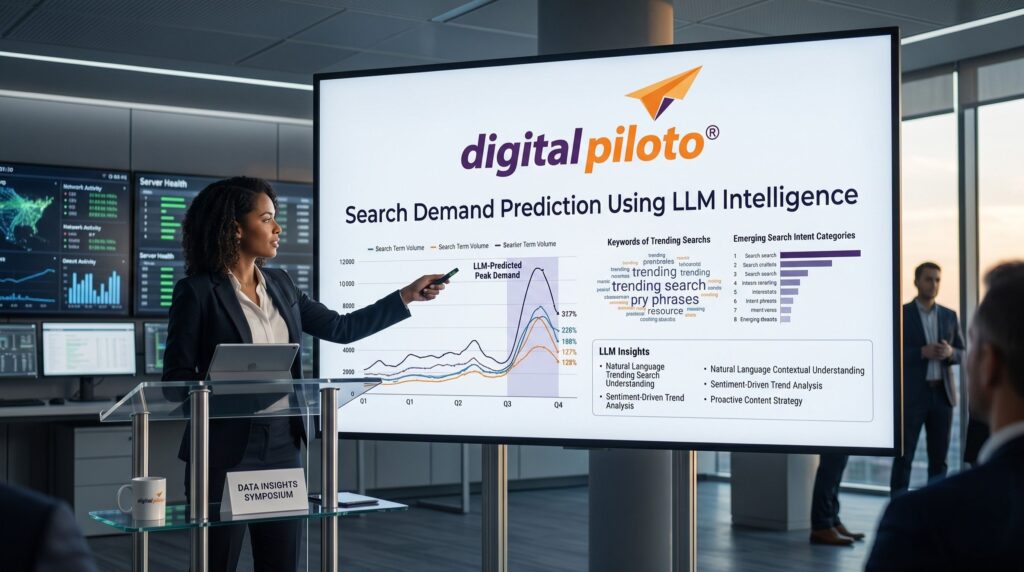

Search demand prediction using LLM intelligence is the process of analyzing language patterns, user intent, conversational trends, and AI-driven search behavior to forecast what people are likely to search for next. Modern brands use large language models (LLMs) to identify emerging interests earlier, optimize content strategies, and align marketing efforts with future customer demand instead of reacting too late.
Today, every data-focused best digital marketing company in Kolkata understands that search behavior is no longer just keyword-driven. AI-powered search systems now interpret context, intent, and conversational meaning, which makes predictive intelligence far more valuable than traditional search volume analysis alone.
What Is Search Demand Prediction Using LLM Intelligence?
Search demand prediction with LLM intelligence involves using large language models to detect evolving patterns in human language, search behavior, and online conversations before they become mainstream trends.
Definition in Simple Terms
LLMs analyze massive amounts of text-based information from:
- Search queries
- Online discussions
- Customer interactions
- Social media conversations
- AI-assisted search prompts
The goal is to predict what audiences will search for in the near future and prepare content, campaigns, and products accordingly.
Why Traditional Keyword Research Is No Longer Enough
Traditional SEO tools mostly measure historical search volume. That creates a reactive marketing system.
LLM intelligence changes the approach completely.
Instead of asking:
“What are people searching for now?”
Brands can ask:
“What are people likely to search for next?”
That shift creates a significant competitive advantage.
How LLM Intelligence Predicts Search Demand
1. Conversational Pattern Analysis
LLMs understand natural language patterns across millions of conversations.
They identify:
- Emerging concerns
- Shifting terminology
- New problem statements
- Changing customer expectations
For example, before “AI workflow automation” became a dominant business trend, conversational signals around productivity overload and repetitive digital tasks were already increasing online.
2. Intent Evolution Detection
Search intent constantly changes.
LLM systems detect subtle shifts in how users ask questions, compare products, or describe problems.
This helps brands identify:
- New audience segments
- Upcoming market opportunities
- Declining customer interests
- High-conversion content gaps
3. Semantic Relationship Mapping
Unlike older search systems, LLMs understand relationships between concepts.
This means they can predict growing topic ecosystems instead of isolated keywords.
For example:
- Remote work trends may connect with ergonomic products, mental wellness, productivity software, and virtual collaboration tools.
That broader understanding improves forecasting accuracy dramatically.
Step-by-Step Framework for Search Demand Prediction
Step 1: Monitor AI-Driven Search Conversations
Brands should analyze:
- Conversational search queries
- Voice search behavior
- AI-generated question patterns
- Emerging online discussions
These sources often reveal demand shifts earlier than conventional analytics tools.
Step 2: Identify Intent Clusters
Instead of focusing only on keywords, group searches into intent clusters.
Examples include:
- Problem-solving intent
- Purchase research intent
- Educational intent
- Comparison-driven intent
Intent clustering creates a more realistic understanding of future customer behavior.
Step 3: Align Campaigns Before Demand Peaks
Brands that act early usually dominate visibility.
Businesses collaborating with a performance-focused PPC agency Kolkata often use predictive search intelligence to launch campaigns before market competition becomes expensive.
This reduces advertising costs and improves conversion opportunities.
Step 4: Build Predictive Content Ecosystems
LLM intelligence works best when integrated into content strategy.
Create:
- Topic clusters
- Question-answer content
- AI-readable guides
- Intent-focused landing pages
This helps search engines and AI systems connect your brand to future demand trends.
Bullet Insights: Benefits of LLM-Based Search Prediction
- Earlier identification of market trends
- Improved campaign timing
- Better content planning
- Higher organic visibility
- Smarter customer targeting
- Reduced marketing waste
Real-World Example of Predictive Search Intelligence
Imagine a software company noticing increasing conversational patterns around “AI meeting fatigue” and “workflow overload.”
Instead of waiting for mainstream demand, the company develops:
- Productivity automation features
- Educational blog content
- Targeted ad campaigns
- Industry-focused webinars
A few months later, demand for AI workflow tools rises sharply.
Because the company acted early, it already owns search visibility, audience trust, and stronger lead generation channels.
Common Mistakes in Search Demand Prediction
Focusing Only on Keywords
Keywords alone rarely reveal deeper intent or future behavioral shifts.
Ignoring Conversational Search Trends
AI-driven search is increasingly conversational. Brands that ignore natural language patterns miss early opportunity signals.
Separating SEO from Predictive Intelligence
Search forecasting should directly influence content and optimization strategies.
That is why businesses investing in advanced SEO agency in Kolkata services are now integrating LLM-driven forecasting into long-term organic growth planning.
Industries Benefiting Most from LLM Search Prediction
- E-commerce brands
- SaaS businesses
- Healthcare companies
- Financial technology firms
- Education platforms
- Digital service providers
These industries depend heavily on rapidly evolving customer intent and online discovery behavior.
The Future of Search Demand Prediction
Search demand prediction will become increasingly autonomous as AI systems evolve.
Future platforms may automatically:
- Predict emerging customer interests
- Recommend content strategies
- Adjust campaign targeting
- Forecast revenue opportunities
Brands that adopt LLM intelligence early will have a major advantage in visibility, audience trust, and long-term growth.
FAQs About Search Demand Prediction Using LLM Intelligence
What is LLM intelligence in search forecasting?
LLM intelligence uses large language models to analyze search behavior, conversations, and intent patterns to predict future demand.
Why is predictive search analysis important?
It helps businesses identify future customer interests before demand becomes highly competitive.
How do LLMs improve keyword research?
LLMs understand context, semantics, and conversational intent, making predictions more accurate than traditional keyword analysis.
Can small businesses use LLM-driven forecasting?
Yes. Small businesses can use AI-powered tools to analyze search trends and improve marketing decisions.
What industries benefit most from predictive search intelligence?
Industries with fast-changing customer behavior, including SaaS, e-commerce, healthcare, and education, benefit significantly.
Conclusion
Search demand prediction using LLM intelligence is transforming how brands approach digital growth. Businesses no longer need to rely only on historical reports or delayed trend analysis.
Brands that understand future search intent earlier can create smarter campaigns, stronger visibility, and more sustainable competitive advantages in an AI-driven search environment.
Blog Development Credits:
This article was inspired by strategic concepts explored by Amlan Maiti, developed using advanced AI-assisted research workflows, and refined with SEO optimization support from Digital Piloto Private Limited.