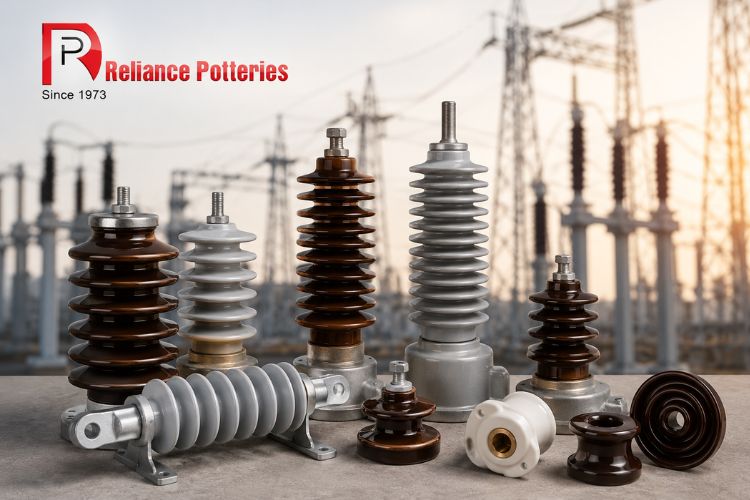

Power transmission systems are built to handle enormous electrical loads, but their reliability can depend on surprisingly small components. Insulators keep energized conductors separated from towers and supporting structures while helping systems withstand electrical and environmental stress. Choosing dependable Insulator Suppliers is therefore a practical decision, not merely a purchasing exercise.
Also Read: How ESP Insulators Improve Dust Collection System Performance
Why Insulators Matter in Power Transmission
Think of an insulator as the quiet guardian of a transmission line. It may not attract attention when everything works properly, yet its performance becomes critical when voltage, weather, contamination, mechanical loading, or sudden electrical events put the network under pressure.
Transmission insulators provide electrical insulation while physically supporting conductors. Depending on the application, utilities may use porcelain, glass, polymeric, or composite designs. The right choice depends on voltage level, mechanical requirements, installation conditions, pollution exposure, and the configuration of the transmission system.
The importance of insulation coordination is also reflected in international engineering standards. The International Electrotechnical Commission’s IEC develops international standards covering electrical equipment and systems, including insulation-related requirements. This gives manufacturers and utilities a common technical framework when evaluating equipment.
What to Look for in Trusted Insulator Suppliers
Not every supplier offers the same level of engineering support or manufacturing consistency. A dependable supplier should understand where an insulator will be installed and what operating conditions it must survive.
1. Material and Manufacturing Quality
For porcelain insulators, raw material preparation, forming, drying, glazing, and firing all influence the finished product. Even a small manufacturing inconsistency can affect mechanical strength or electrical performance. That’s why experienced buyers tend to look beyond a catalogue photograph and ask about production controls and testing procedures.
- Material quality: Check whether the selected material suits the voltage and environmental conditions.
- Dimensional consistency: Accurate dimensions help ensure proper installation and assembly.
- Surface finish: Smooth, well-finished surfaces can be important where contamination and electrical stress are concerns.
- Testing: Ask about routine and type-testing practices relevant to the product.
2. Product Range and Application Knowledge
A supplier becomes considerably more useful when it can support different transmission and substation requirements. Pin insulators, suspension insulators, post insulators, bushings, and specialized industrial insulators each have different roles.
For example, a transmission project in a clean rural environment may face very different contamination conditions from equipment installed near an industrial zone or coastal region. A technically capable supplier should be willing to discuss these differences before recommending a product.
Understanding Electrical and Environmental Stress
Power networks rarely operate in laboratory conditions. Insulators may face rain, dust, salt deposits, temperature changes, wind, vibration, and pollution. Over time, these factors can influence surface performance and leakage behaviour.
According to the U.S. Department of Energy, modernizing the electricity grid involves improving the reliability, resilience, and flexibility of power infrastructure. Reliable components—including insulation systems—form part of that broader infrastructure challenge.
For buyers, this reinforces a useful point: selecting an insulator should begin with the operating environment, not simply the product name.
Specialized Insulators for Industrial Applications
Transmission projects are only one part of the insulation landscape. Industrial equipment, electrostatic precipitators, substations, and high-voltage assemblies can require specialized components with specific mechanical and thermal characteristics.
This is where specialist manufacturers can offer an advantage. A FRP Shaft Insulators Manufacturer, for instance, may provide products designed around particular industrial support requirements rather than generic electrical applications.
For procurement teams, working with a manufacturer familiar with specialized applications can simplify technical discussions and reduce the risk of selecting a component that looks suitable on paper but does not match the actual installation.
3. Testing and Documentation Matter
Good documentation may seem mundane, but it becomes extremely valuable when a project involves multiple contractors, consultants, and inspection stages. Reliable suppliers should be able to provide relevant technical information and test documentation for the products being supplied.
- Review product drawings and dimensional specifications.
- Confirm applicable electrical and mechanical test requirements.
- Check material and manufacturing documentation where required.
- Keep inspection and test records aligned with project specifications.
How to Evaluate an Insulator Supplier
Before finalizing a purchase, take a step back and evaluate the supplier as a long-term technical partner. A low quotation is attractive, certainly, but it should not outweigh product reliability or engineering support.
- Manufacturing capability: Can the supplier handle your required volume and specifications?
- Quality systems: Are inspection and testing processes clearly defined?
- Customization: Can the supplier accommodate project-specific dimensions or designs?
- Delivery reliability: Does the company have a realistic system for production and dispatch?
- Technical support: Can engineers answer application-related questions?
It is also sensible to request samples or technical documentation before committing to a large order. A few extra questions at the procurement stage can prevent much bigger problems during installation.
Frequently Asked Questions
What types of insulators are used in power transmission?
Common types include suspension, pin, strain, post, and specialized high-voltage insulators. The appropriate type depends on voltage, conductor arrangement, mechanical loading, and installation conditions.
Why is porcelain commonly used for electrical insulators?
Electrical porcelain offers strong insulating performance, mechanical strength, durability, and resistance to many outdoor operating conditions. Its suitability still depends on the specific application and design.
How do I choose the right insulator supplier?
Evaluate manufacturing capability, product quality, testing procedures, certifications or applicable standards, technical support, delivery performance, and experience with your specific application.
Are specialized insulators different from transmission insulators?
Yes. Specialized industrial insulators may be designed for particular equipment, mechanical loads, thermal conditions, or electrical environments. Their specifications should be matched carefully to the intended application.
Also Read: Trusted Insulators Manufacturers in India 2026
Final Thoughts
Reliable power transmission starts with thousands of carefully considered engineering decisions, and insulation is one of the most important. The right supplier combines dependable materials, controlled manufacturing, appropriate testing, and practical technical support. When those pieces come together, insulators can quietly do what they are supposed to do—keep power moving safely and reliably.
Blog Development Credits:
This article was developed by Reliance Potteries with AI-assisted research and drafting, followed by human review, content refinement, and final SEO optimization by the Reliance Potteries team.