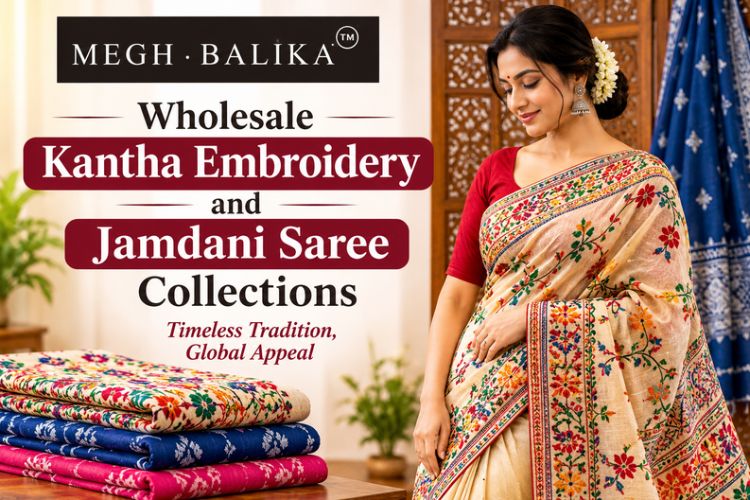

Indian handcrafted textiles offer US boutiques an opportunity to introduce distinctive designs, traditional craftsmanship and culturally meaningful fashion collections. Among the most interesting choices are Kantha-embroidered sarees and Jamdani textiles, two Bengal-inspired crafts with different production techniques and visual characteristics. For retailers evaluating a kantha embroidery supplier USA, understanding these differences is an important first step towards building a profitable and authentic textile collection.
Also Read: The Role of Thread Selection in Enhancing Traditional Embroidery Techniques
Understanding Kantha Embroidery and Jamdani Weaving
Kantha and Jamdani represent different aspects of traditional Indian textile craftsmanship. Both are associated with Bengal’s rich textile heritage, but their production methods, surface textures and design characteristics are different.
Kantha: The Art of Decorative Running Stitches
Kantha is a traditional embroidery technique historically associated with Bengal and Bangladesh. Its defining feature is the running stitch, which artisans use to create floral patterns, geometric arrangements, natural elements and narrative-inspired designs.
Traditional Kantha developed through the practice of layering old sarees and other fabrics and stitching them together. Contemporary Kantha sarees apply this decorative technique to different fabric bases, including cotton and silk.
For wholesale buyers, the appeal lies in the visible handwork, individual design character and detailed embroidery. Each collection can offer a different balance of decorative density, fabric texture and colour combinations.
Jamdani: Intricate Motifs Created Through Weaving
Jamdani is a specialized handloom weaving technique in which additional weft threads create decorative motifs directly within the fabric structure. Traditional Jamdani is particularly associated with fine cotton textiles, delicate floral patterns and geometric designs.
Unlike embroidery applied to finished fabric, Jamdani motifs emerge during the weaving process. This makes the technique especially valuable for retailers looking for lightweight, detailed textiles with a distinctive woven appearance.
UNESCO recognizes the traditional art of Jamdani weaving as intangible cultural heritage, highlighting its importance to artisan communities and textile traditions.
Why Should US Boutiques Consider Both Collections?
Combining Kantha and Jamdani allows retailers to offer different handcrafted experiences rather than depending on one textile style.
Kantha collections appeal to customers who appreciate visible needlework, expressive motifs and textured fabric surfaces. Depending on the base material, they can complement everyday ethnic fashion as well as occasion-focused collections.
Jamdani offers another design direction through its woven motifs, delicate patterns and traditional craftsmanship. Cotton varieties can appeal to buyers seeking lighter garments, while suitable silk variations may serve more occasion-oriented preferences.
For boutique owners, the advantage is assortment diversity. Different techniques, colours, materials and levels of decorative detailing can support collections aimed at different customer preferences.
How to Evaluate Authenticity Before Wholesale Purchasing
Product photographs alone are insufficient when sourcing handcrafted textiles internationally. Buyers should request detailed product information and physical or visual evidence of the actual craftsmanship.
What to Check in Kantha Sarees
- Stitching technique: Request close-up images showing the running stitches rather than relying only on decorative photographs.
- Reverse-side finishing: Examine the back of the fabric for evidence of hand stitching and neat thread management.
- Embroidery density: Confirm whether the work covers the entire saree, the border, the pallu or selected areas.
- Fabric composition: Ask whether the base material is cotton, pure silk, Tussar or a blended textile.
- Consistency: Compare sample pieces with the proposed bulk-production standard.
Small natural variations can occur in handmade embroidery. However, they should not be confused with poor finishing, loose threads or inconsistent construction.
What to Check in Jamdani Sarees
- Weaving construction: Examine how the decorative motifs are integrated into the fabric.
- Reverse-side details: Request close-up photographs to assess the extra-weft technique.
- Fabric specifications: Confirm the actual fibre composition and yarn details.
- Motif quality: Evaluate pattern definition, spacing and overall design balance.
- Origin information: Ask for accurate weaving-location and product documentation.
Retailers should also distinguish handwoven Jamdani from printed or mechanically produced imitations. Product names alone are not sufficient proof of manufacturing technique.
What Should US Wholesale Buyers Verify Before Importing?
International textile procurement involves more than selecting attractive sarees. Retailers should establish clear commercial and documentation requirements before confirming a bulk order.
A practical supplier evaluation should cover the following areas:
- Wholesale pricing: Request a detailed quotation showing unit costs, order quantities and applicable customization charges.
- Minimum order quantity: Confirm the MOQ for each design and whether mixed collections are accepted.
- Product samples: Review fabric swatches or pre-production samples before approving larger orders.
- Production timelines: Confirm estimated preparation and dispatch schedules, especially for detailed hand embroidery.
- Export documentation: Discuss commercial invoices, packing information, country-of-origin details and shipping arrangements.
- Import compliance: Confirm applicable US fibre-content, country-of-origin and care-labelling requirements with the responsible importer or customs professional.
The US Federal Trade Commission provides guidance on textile labelling, while US Customs and Border Protection explains additional considerations for importing textile products. Buyers should also verify the applicable customs classification and duty before placing an order.
Choosing a Suitable Indian Textile Wholesale Partner
A dependable wholesale relationship should involve transparent communication, accurate product specifications and clear expectations about quality and delivery.
Retailers evaluating a jamdani cotton saree exporter should pay particular attention to the difference between traditional cotton Jamdani and other silk or blended variations. The material, weaving location and actual construction should be documented for each product.
Megh Balika offers a curated range of traditional Indian saree collections, including Kantha stitch and Jamdani designs. Its wholesale and export enquiry programme provides a starting point for retailers seeking collection information, samples and pricing.
Buyers can explore the Kantha stitch collection and Jamdani saree collection to understand the available textile categories before discussing specific requirements.
Final Thoughts: Build a Distinctive Handcrafted Textile Collection
Wholesale Kantha embroidery and Jamdani sarees offer US boutiques different ways to introduce traditional Indian craftsmanship to their customers. While Kantha emphasizes decorative needlework, Jamdani showcases the technical artistry of handloom weaving.
The best sourcing decisions begin with understanding these differences, verifying product specifications and establishing clear wholesale expectations. A transparent relationship with an experienced textile supplier can help retailers develop collections that respect traditional craftsmanship while meeting contemporary fashion preferences.
Explore Megh Balika’s handcrafted textile collections and contact the team to discuss wholesale catalogues, product samples and sourcing requirements for your US boutique.
Also Read: Best Jamdani Saree Importers in the USA
Blog Development Credits
Megh Balika developed the concept, used AI-assisted research and writing tools including ChatGPT, Google Gemini, and Copilot, and refined the article for clarity, search relevance, and SEO.