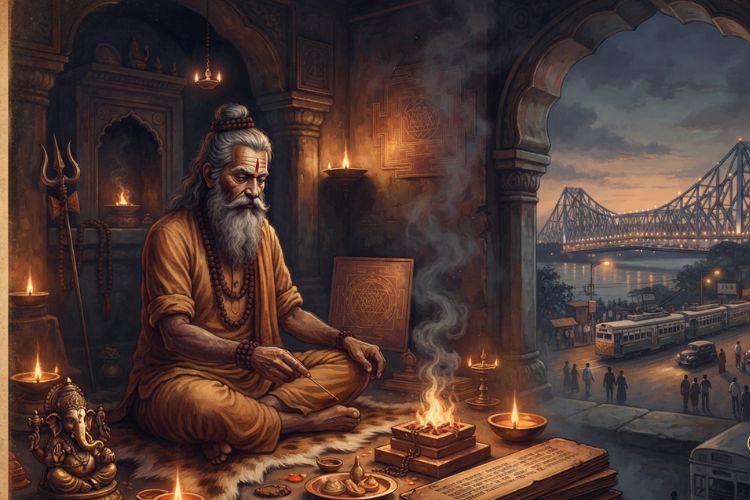

Kolkata’s relationship with black magic is complicated. The city sits at the heart of Bengal’s Tantric-Sakta heritage, a tradition with documented roots stretching back over a millennium. Yet the same cultural landscape that produced authentic spiritual practice has also attracted fraudsters who exploit desperation. If you are searching for the Best Black Magic Specialist In Kolkata, the first step is separating cultural tradition from commercial exploitation—and understanding what black magic actually means in the Bengali context.This guide does not sensationalize. It does not promise supernatural results. It explores what black magic beliefs actually are, why misconceptions persist, and how to protect yourself if you choose to seek help. A Pune guru arrested in April 2026 allegedly built a 27-acre ashram empire after “learning black magic in West Bengal”. Understanding how such fraud operates is your best protection.
Also Read: Best Tantrik in Kolkata: Questions to Ask Before Hiring
Understanding Black Magic in the Bengali Context
What is commonly called “black magic” in Bengal has historical roots in Tantric practices that scholars have documented for centuries. Bengal was a stronghold of Vamacara (left-hand path) Tantrism, with Yogini worship and Tantric-Sakta religion flourishing from the early medieval period. The Sian Stone Inscription from the time of the Kamboja-Pala king Nayapala (1027–43 CE) references temples dedicated to Carca, Pingalarya, 64 Yoginis, and 9 Candikas.
Bengal’s Tantric traditions were influenced by Vajrayana Buddhism and the 84 Siddhas associated with the Caryapadas. The fearful aspects of goddesses—Kapali, Bhadrakali, Candi—were more recognized in Bengal than benign forms, which is why Bengal became known as a center for Vamacara practice.
This historical context matters because it establishes a crucial distinction. Tantra, as a tradition, involves disciplined practice (sadhana), lineage transmission, and spiritual development. What modern commercial “black magic” often promises—guaranteed love, wealth, or revenge—is a corruption of this tradition, not an expression of it.
Common Misconceptions About Black Magic
Misconceptions about black magic flourish because they serve different purposes. Some protect cultural identity. Some enable fraud. Here are the most common—and what the evidence actually suggests.
| Misconception | What the Evidence Suggests |
|---|---|
| “Black magic can guarantee specific outcomes” | No credible tradition promises guaranteed material results. Practitioners who guarantee outcomes are making promises no one can keep. The April 2026 Pune case involved a guru claiming to cure cancer—a dangerous falsehood. |
| “Black magic is only practiced by evil people” | Tantric traditions are religious and philosophical systems with ethical frameworks. The Vamacara path is not “evil”—it is a specific ritual approach within a broader tradition. |
| “If a practitioner is powerful enough, they can control anyone” | This belief enables exploitation. It convinces victims that their suffering is proof of the practitioner’s power, when it may be proof of fraud. A 2026 study found only 9.6% of respondents believed people can actually be bewitched through formulas. |
| “Black magic is uniquely Indian” | Belief in magic and witchcraft exists across cultures and throughout history. A 1983 paper noted that “the belief in magic has existed in all cultures”. Psychological research links traditional paranormal beliefs to anxiety about uncontrollable external forces. |
| “Charging high fees proves the practitioner is powerful” | High fees prove only that the practitioner charges high fees. The Bhosle case involved escalating payments from devotees—a classic fraud pattern. |
Why People Seek Black Magic Specialists
Understanding motivation is essential for ethical engagement. People don’t seek black magic specialists because they are irrational. They seek help because they are suffering and feel powerless.
A 2024 UK study of over 3,000 people found that traditional paranormal beliefs—those dealing with witchcraft and traditional religion—correlated with elevated distress and reduced feelings of coping. Researchers suggested these beliefs reflect “anxiety about a lack of control over external forces that influence one’s existence”.
In Kolkata, this anxiety operates within a specific cultural framework. The stakes are high: a March 2026 incident in Birbhum saw a 70-year-old tribal woman beaten to death over witchcraft allegations. In 1993, a Purulia witchcraft-related murder led to life sentences that the Supreme Court upheld in 2026. Black magic accusations are not abstract—they have lethal consequences.
For those seeking guidance on relationship or personal matters within this cultural context, the Top Tantrik In Kolkata resource provides a broader overview of traditional services. Those whose primary concern involves astrological timing or birth chart analysis may find the Best Astrologer In Kolkata page more relevant to their needs.
How Black Magic Fraud Operates
The April 2026 arrest of Manohar Mama Bhosle provides a case study in exploitation patterns :
- False credentials. Bhosle failed his DEd exam twice, then allegedly learned “black magic in West Bengal” and rebranded himself as “Balumama’s incarnation”.
- Escalating products. He sold babhla leaves, sugar, and “bhandara” to devotees—small purchases that created dependency.
- Impossible claims. He claimed to cure cancer, a claim that exploits desperate patients and their families [citation:3].
- Repeat offending. He was previously arrested in 2021 for cheating a devotee of ₹2.51 lakh and sexual exploitation.
- Physical isolation. He built a 27-acre ashram, creating a controlled environment where devotees had limited outside contact.
These patterns are consistent across fraud cases. The specifics change; the structure does not.
Questions to Ask Before Engaging Any Practitioner
These questions are not about testing mystical knowledge. They are about testing transparency and ethics. A genuine practitioner will welcome them. A fraud will deflect, intimidate, or provide vague answers.
1. “What is your lineage and training background?”
A practitioner within a genuine tradition can name their teachers, their place of practice, and their lineage. Vagueness here is a warning sign.
2. “What exactly will you do, and what will it cost—total?”
Transparent practitioners provide complete cost information upfront. Fraudsters provide partial answers and introduce “unexpected obstacles” requiring additional payments. Bhosle’s operation involved escalating sales of ritual items—a model designed to extract money incrementally.
3. “Will you ever ask for my photograph or ID before consultation?”
Some traditional practices involve birth details. But photographs or ID documents requested before substantive consultation are red flags. The 2026 Kolkata fraud case involved a practitioner who demanded a photograph and date of birth before escalating payments to over ₹7.66 lakh.
4. “What happens if I decide to stop?”
This question reveals everything. A genuine advisor respects autonomy. A fraud threatens consequences—spiritual, financial, or personal.
5. “Do you have a physical location I can visit?”
Accountability requires a verifiable address. Practitioners operating only through social media and UPI transfers have nothing to lose—and nothing to offer you.
Your Legal Rights
This is the most under-discussed aspect of black magic consultation in India. You have rights.
The Prevention of Black Magic, Witchhunting and Superstitious Practices Bill, 2024 proposes:
- Special Courts for speedy trials
- A National Register of Offenders (public document)
- Victim compensation of at least ₹5 lakh for physical or mental harm
- ₹10 lakh compensation for death resulting from such practices
- Witness protection including relocation and identity protection
- Whistleblower protection against retaliation
Maharashtra’s 2013 Act already provides enforcement mechanisms: Vigilance Officers with powers to search, seize, and investigate. Convicted offenders’ names and addresses can be published in local newspapers.
Even without specific legislation, existing criminal law covers fraud, cheating, criminal intimidation, and extortion. The Bhosle case involved charges under economic offences and black magic laws.
Expert Insight: A Balanced Perspective
Black magic exists as a cultural concept in Bengal. It has historical roots in legitimate Tantric traditions. But the commercial “black magic specialist” industry operates largely outside that tradition—in a space where desperation meets exploitation.
If someone approaches you claiming they can solve your problems through black magic, ask yourself: Why would someone with genuine spiritual power need to advertise on social media? Why would they need your money? Why would they threaten you if you hesitate?
The most powerful protection against fraud is not skepticism about the supernatural. It is skepticism about anyone who claims to control it for a fee.
Frequently Asked Questions
Is black magic real in Kolkata?
Black magic exists as a cultural belief and historical tradition in Bengal, with documented Tantric roots. Whether it produces supernatural effects is a matter of belief. A 2026 study found that 18.6% of respondents believed black magic really exists, while only 9.6% believed people can actually be bewitched through formulas and incantations.
How can I identify a fake black magic specialist?
Key warning signs include: guarantees of specific outcomes, escalating payment requests, threats if you stop, no verifiable physical address, refusal to document costs, and requests for photographs or IDs before consultation. The Bhosle case involved all these patterns.
What are the legal protections against black magic fraud in India?
The Prevention of Black Magic Bill, 2024 proposes Special Courts, a National Register of Offenders, victim compensation of ₹5–10 lakh, and witness protection. Maharashtra’s 2013 Act provides enforcement mechanisms including search and seizure powers. Existing criminal law covers fraud, extortion, and intimidation.
Why do people believe in black magic?
Psychological research links traditional paranormal beliefs to anxiety about uncontrollable external forces and reduced coping capacity. In Bengal, these beliefs exist within a specific cultural framework where Tantric traditions have deep historical roots.
Can black magic accusations be dangerous?
Yes. In March 2026, a 70-year-old tribal woman in Birbhum was beaten to death over witchcraft allegations, with five people arrested. A 1993 Purulia witchcraft murder led to life sentences upheld by the Supreme Court in 2026. Accusations of black magic can have lethal consequences.
Also Read: Best Tantrik In Kolkata | Spiritual Guidance for Digital Age Relationships
The Bottom Line
Kolkata’s relationship with black magic is rooted in a complex cultural history. That history deserves respect. But respect for tradition does not require tolerance of fraud. The best protection is not dismissing all belief—it is learning to distinguish between cultural heritage and commercial exploitation. Ask the questions. Watch for the warning signs. Know your rights. A genuine practitioner will respect your caution.
Blog Development Credits:
This blog is the result of collaborative creativity. The initial concept was thoughtfully envisioned by Sree Sibnath, while the core content was crafted using advanced AI tools such as ChatGPT and Google Gemini.