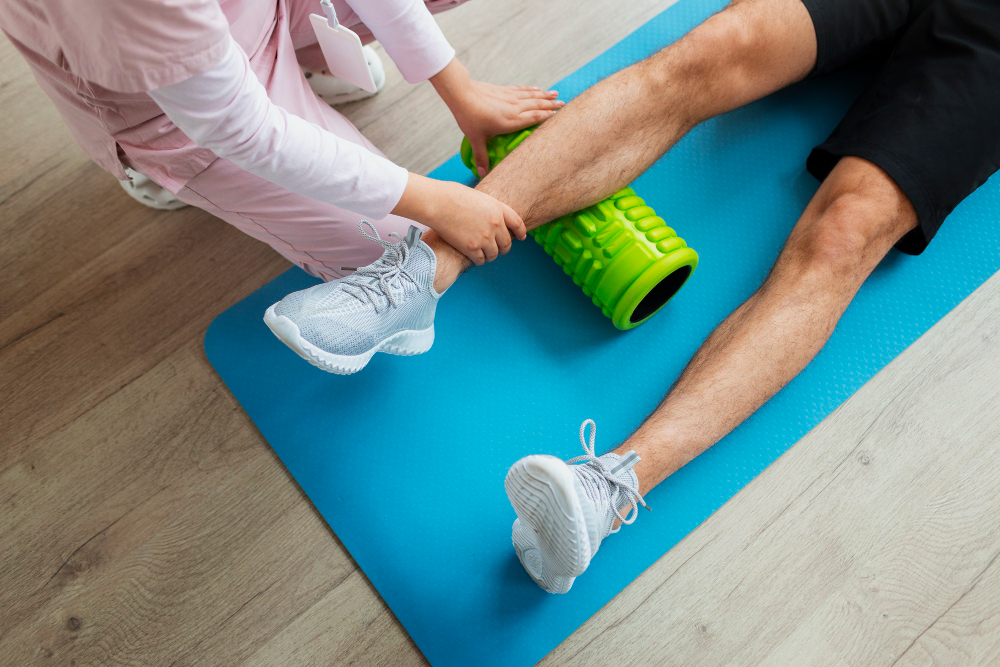

That sharp heel pain after getting out of bed can make an ordinary morning in Kolkata feel surprisingly difficult. Plantar fasciitis often responds well to consistent, gentle exercise rather than complete rest. The right stretches and strengthening movements can gradually reduce strain on the foot and support recovery. If pain persists, treatment for plantar fasciitis may also be needed.
Why Exercise Helps Plantar Fasciitis?
The plantar fascia works like a supportive band beneath your foot. Every step places some load on it. When the calf, ankle, or small muscles of the foot are tight or weak, the fascia may have to handle more stress than it comfortably can.
A sensible exercise routine aims to improve flexibility, restore foot strength, and make everyday movement easier. The goal is not to force a painful stretch. Think of recovery more like slowly loosening a stiff door hinge than trying to kick the door open.
Best Exercises for Heel Pain Relief
1. Calf Stretch Against a Wall
Stand facing a wall with the painful foot behind you. Keep that heel on the floor, straighten the back knee, and gently lean forward. Hold for about 30 seconds before relaxing. Repeat several times according to your comfort level.
This simple movement targets the calf and Achilles area, which can influence tension around the heel. The American Academy of Orthopaedic Surgeons recommends heel-cord stretching as part of foot and ankle conditioning.
2. Bent-Knee Calf Stretch
Use the same wall position, but slightly bend the back knee while keeping the heel grounded. You should feel the stretch lower in the calf. Avoid bouncing or pushing aggressively into discomfort.
3. Towel Stretch
Sit with your leg extended and loop a towel around the ball of your foot. Gently pull the towel toward you while keeping the knee straight. Hold the stretch, relax, and repeat.
This is particularly convenient for people who feel their worst pain first thing in the morning. AAOS guidance includes the towel stretch among foot and ankle conditioning exercises.
4. Gentle Foot Roll
Sit comfortably and slowly roll a tennis ball or similarly sized object beneath the arch of your foot. Keep the pressure mild rather than digging into the painful heel.
- Try it after prolonged sitting or standing.
- Keep the movement slow and controlled.
- Stop if the exercise causes sharp or increasing pain.
AAOS also describes rolling the sole over a golf ball as a conditioning exercise for the plantar fascia.
Add Strength, Not Just Stretching
Stretching gets most of the attention, but strengthening matters too. Once acute discomfort settles, controlled exercises for the foot and lower leg can help the structures involved in walking tolerate everyday loads more effectively.
- Toe curls: Use your toes to gently gather a small towel toward you.
- Calf raises: Rise slowly onto your toes while holding a stable surface for balance.
- Short-foot exercise: Gently draw the ball of the foot toward the heel without curling the toes.
Start with a small number of repetitions and increase gradually. If you’re unsure which exercise suits your symptoms, consulting the best doctor to treat plantar fasciitis can help identify contributing factors such as restricted ankle movement, foot mechanics, or another source of heel pain.
Make the Routine Work in Kolkata
Consistency is often more practical than intensity. You don’t need an elaborate gym setup. A wall, towel, chair, and a few minutes of daily attention can be enough to build a useful routine.
Also consider the surfaces and footwear you encounter each day. Long walks, prolonged standing at work, hard floors, or unsupportive footwear may continue irritating the foot while you exercise. Appropriate footwear can therefore be part of the bigger recovery picture.
A useful routine might include:
- Gentle stretching after waking and before longer periods of activity.
- Foot and calf strengthening once movement becomes more comfortable.
- Gradually increasing walking or exercise instead of suddenly returning to full activity.
When Should You See a Doctor?
Exercise should feel manageable, not like a battle with your heel. Seek professional assessment if pain is severe, keeps returning, affects normal walking, follows an injury, or does not improve despite consistent self-care. Other conditions can cause heel pain, so persistent symptoms should not automatically be assumed to be plantar fasciitis.
FAQs
1. Can I exercise with plantar fasciitis?
Yes, gentle and appropriate exercises are commonly used during recovery. Avoid movements that sharply increase pain and build activity gradually.
2. How often should I stretch my plantar fascia?
A regular routine is generally more useful than occasional intense stretching. AAOS guidance includes repeated calf and foot stretches as part of conditioning.
3. Is walking good for plantar fasciitis?
Walking may remain possible, but excessive walking or sudden increases in activity can aggravate symptoms. Adjust your activity according to pain and recovery.
4. When should plantar fasciitis be professionally evaluated?
If heel pain persists, worsens, interferes with daily activities, or does not respond to sensible home care, professional evaluation can help confirm the diagnosis and guide treatment.
Final Thoughts
Plantar fasciitis recovery is rarely about finding one magical exercise. It is usually about giving the foot the right combination of mobility, strength, sensible activity, and time. For Kolkata residents dealing with recurring heel pain, a consistent routine can be a practical starting point—but persistent symptoms deserve proper assessment rather than being pushed through.